


Dyslexia Assessment in Loughborough: Why Visual Stress is Often Confused with Dyslexia
Dyslexia and visual stress are frequently confused, particularly when individuals describe words appearing to blur, jump, or flicker on the page. Many people seeking a dyslexia assessment in Loughborough describe these exact experiences. Understandably, they assume these visual issues are definitive signs of dyslexia.
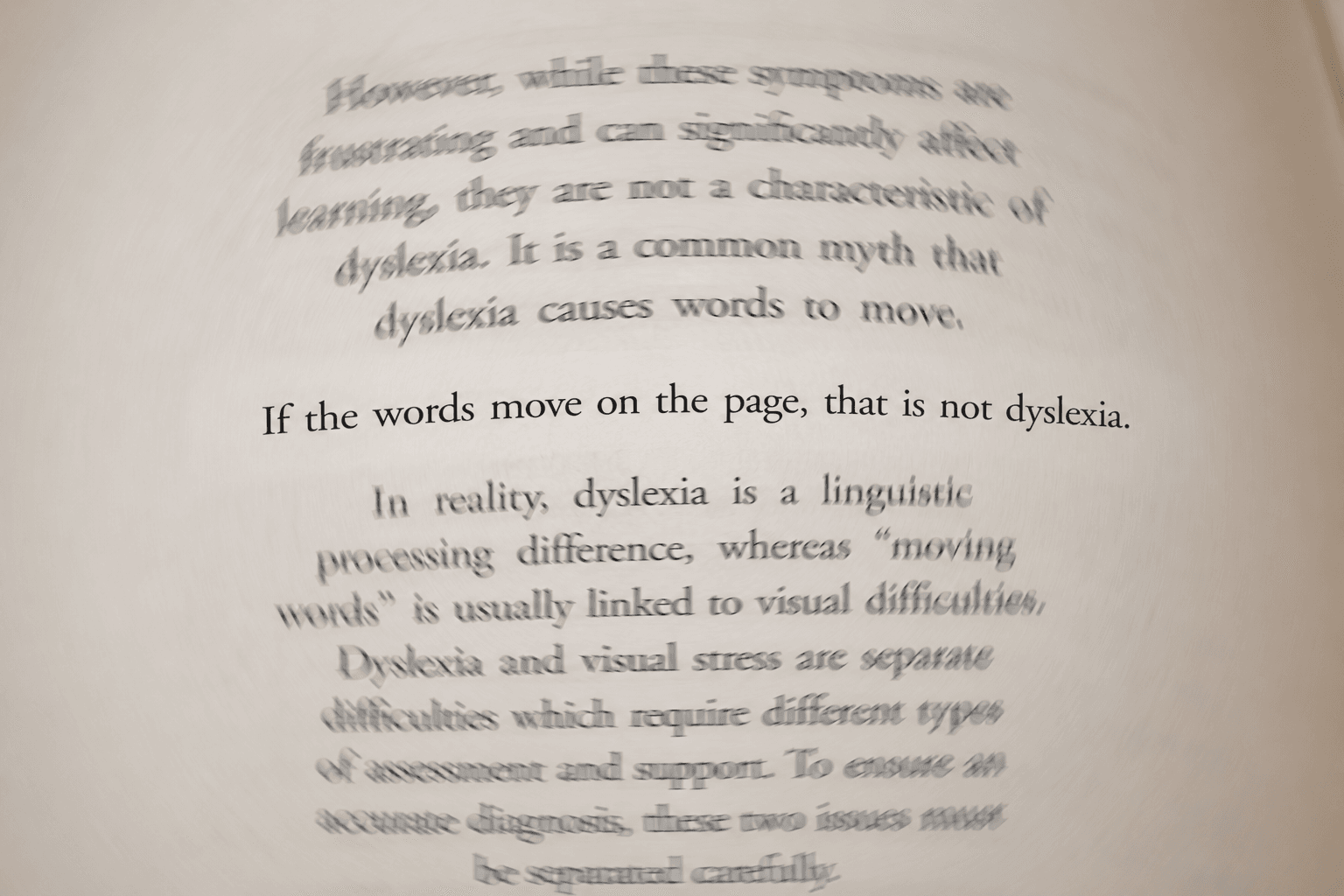
However, while these symptoms are incredibly frustrating and can significantly hinder learning, they are not actually a characteristic of dyslexia. It is a common myth that dyslexia causes words to move. In reality, dyslexia is a processing difference not a visual one. Conversely, “moving words” are typically linked to visual difficulties. Because visual stress vs dyslexia are separate difficulties, they require entirely different types of assessment and support. To ensure an accurate diagnosis, these two issues must be separated carefully.
The Misconception of “Moving Words”
Unfortunately, social media and outdated information have contributed to the widespread misconception that dyslexic people automatically see words moving around on a page. This misunderstanding creates confusion and can delay someone from getting the right support. Although the two difficulties can co-occur, they can also exist entirely separately.
As a specialist provider of dyslexia assessment in Loughborough and Leicestershire, I follow the latest guidance from the SpLD Assessment Standards Committee (SASC). This ensures my assessments align with current professional standards. Current SASC guidance explicitly explains that visual stress is not a defining characteristic of dyslexia.
In fact, the SASC Visual Difficulties Screening Protocol states that:
“A dyslexia or dyscalculia diagnostic decision will NOT BE CONFIRMED if the specialist teacher feels that unresolved visual difficulties are a contributing factor.”
Therefore, any possible visual difficulties must be thoroughly explored before a full dyslexia assessment can take place.
Why Visual Screening Precedes a Dyslexia Assessment
This strict professional guidance is why my dyslexia assessment Loughborough pathway begins with a comprehensive visual difficulties questionnaire.
If you or your child answer “yes” to indicators of visual discomfort – such as frequent headaches during reading, blurred text, or words jumping – the recommended protocol is a referral to an eye care professional before our assessment can proceed. If any visual discomfort or difficulties are noted, an appointment with an Optometrist is required before we can proceed to Full Dyslexia Assessment.
We must rule out or manage these visual barriers first. Before carrying out an assessment, I also check that a recent eye test has taken place. While a high street optician check is a good start, further investigation is sometimes required if symptoms suggest underlying visual stress.
Optometrist vs. Optician: What’s the Difference?
Many people are unaware that a standard high street eye test does not always investigate visual stress or binocular vision difficulties in detail. If your child experiences visual difficulties such as words moving or merging on the page, you need to check with your eye care specialist that this will be investigated during the appointment. A High Street Optician and an Optometrist do not always investigate the same difficulties and it is important that you understand the scope of the specialist that you visit.
For my clients booking a dyslexia assessment in Loughborough, Kegworth, and the surrounding areas, I frequently refer to Austen Optometrists. Their team of highly experienced Optometrists can investigate the complex visual difficulties which are identified during my initial screening. When they receive referrals from Education Pitstop, they understand that the child’s visual difficulties need to be explored and treated before a dyslexia assessment can take place.
Managing visual stress may include targeted eye exercises or precision tinted lenses. Once these visual difficulties are managed, a formal dyslexia or dyscalculia assessment can go ahead with confidence, ensuring the results accurately reflect your child’s underlying learning profile.
Booking a Dyslexia Assessment in Loughborough and Leicestershire
Understanding the nuances of visual stress vs dyslexia helps ensure that individuals receive the correct support, the correct referrals, and the most accurate assessment outcomes possible. In some cases, once visual difficulties are managed, no further educational assessment is even required.
If you are based in Loughborough, Kegworth, or the wider Northwest Leicestershire area and you are concerned about dyslexia, it is important to seek professional advice as early as possible. Contact Education Pitstop to discuss your child’s requirements and to begin the assessment process.
Frequently Asked Questions
Can visual stress be mistaken for dyslexia?
Yes. A significant amount of conflicting online information suggests that visual difficulties are a core feature of dyslexia. They are not. Visual difficulties should always be investigated and resolved before a formal dyslexia assessment takes place.
Does dyslexia cause words to move on the page?
No. Moving, vibrating, or blurry words are not features of dyslexia. These symptoms are much more likely to indicate visual stress or binocular vision difficulties.
Why do I need an eye test before a dyslexia assessment in Loughborough?
SASC guidance dictates that specialist assessors must ensure that visual difficulties have been investigated before a dyslexia assessment takes place. This ensures that visual barriers are not misdiagnosed as dyslexia.
Can you have dyslexia and visual stress together?
Yes, absolutely. They can co-occur, and many individuals experience both. However, because they are separate difficulties, they require distinct pathways of investigation and support.